

Last Updated: November 4, 2026
Quick Summary
American made shirts are usually worth the higher price when you wear them often, because cost-per-wear can end up lower than a cheap tee that cracks or fades within months. Check the exact origin claim, since "Made in USA" means all or virtually all domestic, while "Printed in USA" only covers decoration.
- Divide the purchase price by expected wears to compare true cost.
- A $29 shirt worn 60 times costs about 48 cents per wear.
- A $15 shirt that cracks after 12 wears costs $1.25 per wear.
- Screen printing and direct to garment both work; durability depends on ink quality and the base shirt.
- Check fabric weight, collar construction, and stitch density before buying.
Table of Contents
- Why Shirt Price Alone Misleads You
- Cost-Per-Wear: The Math Behind a Higher Price
- Difference Between Screen Printing and Direct to Garment
- How to Identify High-Quality Graphic Tees
- Benefits of Buying American-Made Clothing
- Hidden Costs of Cheap Fast Fashion Tees
- Our Five Greatuncledad Picks and Who Each Suits
- Choosing Your Next Shirt and Sizing It Right
- Frequently Asked Questions
Why Shirt Price Alone Misleads You
Most shoppers compare graphic tees by sticker price alone, which is misleading. A $21 shirt and a $29 shirt can look similar on a rack yet perform very differently after months of wear. The real question is whether a higher price buys a shirt that lasts. This guide covers what drives price, how to judge quality, and when american made shirts are worth the difference.
The phrase "are american made shirts worth it" usually hides three questions: Does the print hold up? Does the fabric last? Does the purchase match your values? A low price answers none of them. Start with what the shirt will look and feel like after twenty washes, not the price tag.
Cost-Per-Wear: The Math Behind a Higher Price
Cost-per-wear is the most useful way to judge a shirt. Divide the purchase price by the number of times you expect to wear it before it fades, pills, or cracks. A $29 shirt worn 60 times costs about 48 cents per wear. Read why premium graphic tees cost more to make. A $15 shirt that cracks after 12 wears costs $1.25 per wear. The cheaper shirt is the more expensive choice.
The calculation depends on honest estimates. Heavier cotton, tighter stitching, and better ink adhesion usually extend a shirt's life; thin fabric and low-cost prints shorten it. Some Greatuncledad listings describe ring-spun cotton and high stitch density. Verify the exact fabric on each product page, because blends differ by color.
Difference Between Screen Printing and Direct to Garment
Print method affects how a graphic looks and how long it lasts. Screen printing forces ink through a stencil, one color at a time. Compare how cotton and polyester tees differ in feel and print performance. It is well suited to bold, solid designs and large runs, and it tends to feel sturdy. Direct to garment (DTG) printing works more like an inkjet printer applied to fabric. It handles detailed artwork and smaller runs well, and it lets designers use many colors without extra setup.
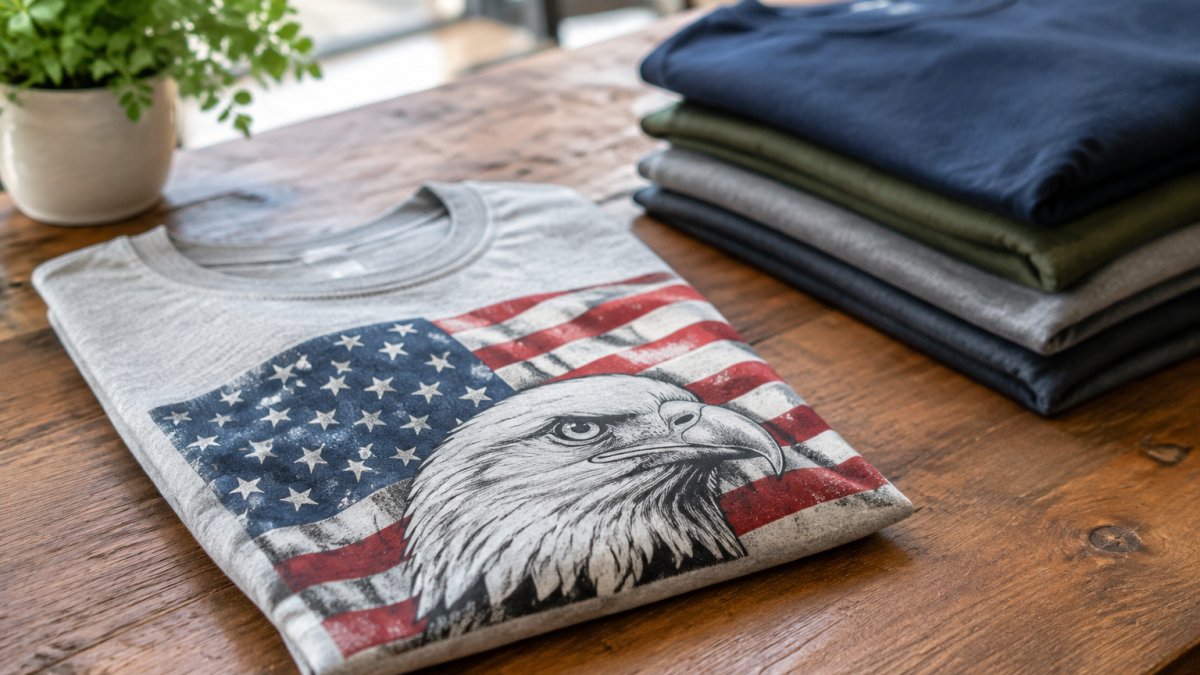
Neither method is automatically better; durability depends on ink quality, curing, and washing. Ask the seller how the print is applied and look for clear product details. Check each product page for its print description.
Watch for one common issue: prints on thin, low-stitch-density shirts can stretch and crack faster than prints on heavier, tightly knit cotton. The base garment matters as much as the ink.
How to Identify High-Quality Graphic Tees
Quality shows up in details you can check before and after buying. Use this short checklist:
- Fabric weight and content: Heavier jersey knits hold their shape better. Note whether the shirt is 100% cotton or a cotton-polyester blend.
- Collar construction: A seamless double-needle collar resists stretching and curling.
- Stitch density: Tighter stitching gives the print a smoother surface and helps it last.
- Hems and neck reinforcement: Taped neck and shoulders reduce stretching over time.
- Fit and sizing: Check the size chart in centimeters and inches, and compare it to a shirt you already own.
Before buying, read the care instructions. Follow the care instructions on each product page. Watch out: even a well-made tee will crack if it goes through a hot dryer every week. See how to keep graphic prints from cracking.
Benefits of Buying American-Made Clothing
Buying domestically made clothing offers benefits beyond the label, but the label is where most shoppers get confused. The Federal Trade Commission (FTC) sets the rules for "Made in USA" claims, and understanding them is the fastest way to tell a genuinely domestic shirt from a marketing slogan.
What the label legally means. Under the FTC's Made in USA standard, a product marketed as "Made in USA" must be "all or virtually all" made in the United States (the FTC). That means the final assembly or processing must happen domestically, and all significant inputs, including the fabric, must be of domestic origin.
Assembly vs. sourcing, the distinction that matters. This is the single biggest source of consumer confusion, and most buying guides skip it. A shirt can be:
- Printed in the USA: The blank tee was manufactured abroad, then decorated domestically. This is common for small print shops and is often described accurately as "printed in USA."
- Assembled in the USA: The shirt was cut and sewn domestically, but the yarn or fabric may be imported.
- Made in the USA: The strictest tier, domestic assembly plus domestic fabric and significant inputs, consistent with the FTC's "all or virtually all" standard.
Each tier supports different things. Printing domestically keeps decoration jobs and quality control close to the customer. Cutting and sewing domestically supports garment-manufacturing jobs and shortens the supply chain. Full domestic production supports the textile supply chain from spinning to finishing. None is automatically better for every buyer, but knowing which one you are paying for is the point.
Why shorter supply chains matter in practice. Domestic production compresses the distance between factory and warehouse, which can mean faster restocking, easier quality inspection, and a clearer paper trail if a batch goes wrong.
Labor and oversight. Domestic garment production falls under U.S. labor law, including wage-and-hour rules enforced by the Department of Labor and workplace-safety standards enforced by OSHA. That does not guarantee every domestic factory is perfect, but it gives buyers a known regulatory framework and a domestic agency to contact. Imported garments face different, often less transparent, oversight.
How to verify a claim before you buy. Read the product description for the exact wording, "Made in USA," "Assembled in USA," or "Printed in USA", and look for a separate statement about where the fabric or blank garment came from. A seller who is precise about the distinction is usually a seller worth trusting.
Watch out: a hangtag or homepage banner that says "American-made" without specifying assembly, printing, or fabric origin may be looser than the FTC standard allows. When in doubt, ask the seller directly which tier applies to the shirt you are buying.
Hidden Costs of Cheap Fast Fashion Tees
Low-priced tees often carry costs that do not show up at checkout. The most visible is replacement, but the bigger story is externalized costs, expenses pushed onto the buyer later, onto workers, or onto the environment.
Chased By Grace Christian T-Shirt – Inspirational Faith Apparel →
1. The replacement treadmill. A shirt that fades or cracks within a season sends you back to the store. A $15 tee that survives 12 wears costs $1.25 per wear, while a $29 tee worn 60 times costs about 48 cents per wear.
2. Sizing inconsistency and returns. Cheap brands often cut to different specs run to run, so the same size fits differently across colors and batches. That produces returns, exchanges, and re-orders, each one a hidden cost in time and, for online buyers, sometimes shipping.
3. Print degradation before fabric failure. On thin, low-stitch-density shirts, prints stretch and crack long before the cotton wears out. Learn why graphic tees fade after washing and how to stop it. The shirt becomes unwearable for its intended purpose while the fabric is still intact.
4. Shipping and the carbon footprint of distance. Most cheap tees are ocean-freighted from overseas hubs, then trucked across the country. The per-shirt shipping footprint is small but not zero, and it stacks on the fabric's own production footprint.
5. Waste and disposal. Fast-fashion economics depend on high volume and short lifecycles. When a shirt fails early, it typically enters the municipal waste stream rather than a resale or recycling channel.
6. Labor conditions you cannot see. Imported garments are produced under a patchwork of foreign labor regimes with varying enforcement.
How to use this. You do not need to eliminate inexpensive shirts. Compare total cost, not sticker price: purchase price plus expected replacements plus the value of your time, weighed against how often you will actually wear the shirt.
Watch out: "durable" and "expensive" are not synonyms. A high-priced shirt with thin fabric and a weak print can fail just as fast as a budget one. Judge the construction details, fabric weight, stitch density, collar build, before you assume price equals longevity.
Our Five Greatuncledad Picks and Who Each Suits
Here are five Greatuncledad tees, with the starting prices listed on each product page. For a wider comparison of what good graphic tee brands offer, see the best quality graphic T-shirt brands guide. The pros and cons reflect what the listings describe, so confirm details before ordering.
1. Chased By Grace Christian T-Shirt - Inspirational Faith Apparel ($21.18)
- Pros: Soft ring-spun cotton on solid colors, seamless double-needle collar, tear-away label, and a printed-in-USA design.
- Cons: Heather and graphite blends contain more polyester, which feels different from solid cotton.
- Best for: Everyday wear and faith-based gifts.
2. God Is Still Writing Your Story Christian T-Shirt ($21.58)
- Pros: Inspirational message, high stitch density for a smooth print surface, and durable tubular construction.
- Cons: Sport grey and heather options use a cotton-polyester blend.
- Best for: Buyers who want a faith message in a shirt built to hold its print.
3. Patriotic Faith USA 250th Anniversary Commemorative T-Shirt ($26.48)
- Pros: Commemorative design, premium comfort, and a tubular fit designed to maintain shape.
- Cons: The most specific theme, so it suits buyers who want a patriotic statement piece.
- Best for: Independence Day events and community gatherings.
4. When God Made Me He Smiled Quote Funny T-Shirt ($29.77)
- Pros: Humorous design, soft fabric, and a high stitch density print surface.
- Cons: The priciest tee in this group, and the humor will not suit every taste.
- Best for: Buyers with a playful personality or a funny gift for a friend.
5. Eagle and Cross Patriotic Christian T-Shirt ($28.62)
- Pros: Built on a heavyweight cotton base with taped neck and shoulders, a classic relaxed fit, and reinforced hems.
- Cons: Heavier fabric feels warmer, which may not suit hot weather.
- Best for: Buyers who want a sturdy, long-wearing shirt with a combined patriotic and faith message.
Choosing Your Next Shirt and Sizing It Right
Start with how you plan to wear the shirt and how often each month. If you wear it often, put more weight on fabric and construction. If it is mainly a gift, focus on design and fit.
Sizing is the step most buyers skip. Measure a shirt you already own that fits well, then compare its length, width, and half chest to the size chart. Use whichever measurement unit is easier for you. If you are buying for someone else, the chart is the best guide, and the return policy matters more.
Our recommendation: pick one shirt from the list above that matches your use, check its care label, and wear it through a full wash cycle before deciding how it performs.
Frequently Asked Questions
Is made in the USA better quality?
Not automatically. Country of origin tells you where a shirt was cut and sewn, not how well it was built. What separates a durable tee is fabric weight, stitch density, the collar construction and the print method. Greatuncledad's listed shirts use ring-spun cotton or heavyweight cotton, with double-needle collars and taped shoulders on several styles. Check those specs first, then let origin be a tiebreaker rather than the whole argument.
Which Greatuncledad shirt is best for everyday wear?
The Stand for the Flag, Kneel for the Cross Patriotic Christian T-Shirt, starting at $24.38, is built on a heavyweight cotton base with taped neck and shoulders and a classic relaxed fit, which suits daily wear. The Chased By Grace Christian T-Shirt, starting at $21.18, is the lowest-priced option and is described as soft ring-spun cotton for everyday use. Pick based on the message you want to carry and the fit you prefer.
What should I look for to verify a shirt is truly made in the USA?
Start with the product listing, which should state where the garment was printed and sewn and name the blank garment. Then look at the tag and the fabrication line, which tells you the fiber blend. Ask the seller directly if the listing is unclear. A specific, checkable statement beats a vague flag graphic.

