

Table of Contents
- Cotton vs Polyester Graphic Tees: Key Differences
- Breathability and Airflow in Summer Heat
- Moisture-Wicking Properties of Polyester
- Durability, Shrinkage, and Print Longevity
- How to Care for Graphic Tees
- Best T-Shirt Blends for Hot Weather
- Which Fabric Should You Choose?
- Frequently Asked Questions
Last Updated: September 25, 2026
Cotton vs Polyester Graphic Tees: Key Differences
The fabric choice in graphic tees matters more than most realize. Cotton vs polyester graphic tees for summer presents a genuine trade-off between comfort and durability. At Greatuncledad, we break down how each fabric performs when temperatures rise.
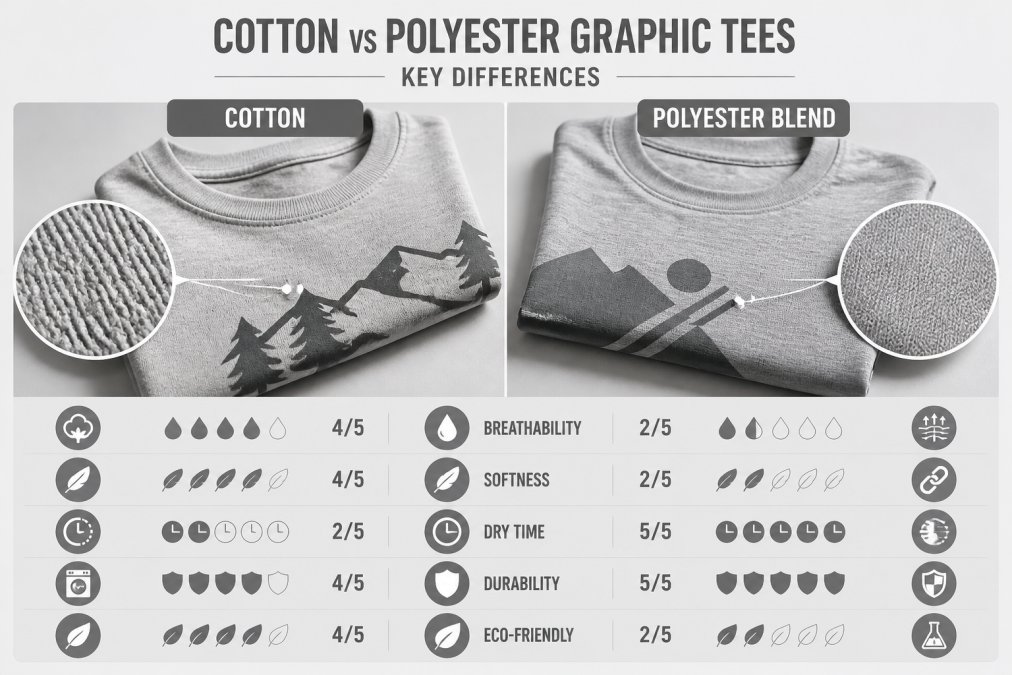
Cotton breathes naturally and feels softer; polyester offers superior moisture-wicking and drying speed. Fabric composition directly impacts print longevity, comfort after workouts, and durability through repeated washing.
The right choice aligns with your priorities: maximum comfort and natural feel, or durability and performance.
Breathability and Airflow in Summer Heat
Cotton wins decisively on breathability. Its natural fiber structure allows air to flow freely, keeping you cooler during hot, humid days.
Polyester traps more heat due to its tightly woven synthetic structure, restricting air permeability. You'll notice the difference on days above 85°F, as the fabric sits closer to your skin.
Fabric weight (GSM, grams per square meter) often matters more than fiber type for summer cooling. A 140 GSM cotton shirt breathes better than a 180 GSM polyester blend because air circulates more freely through lighter-weight fabrics. When weight is controlled, the fiber type difference narrows significantly.
Summer graphic tees typically fall into these weight ranges:
- Lightweight (under 150 GSM): Maximum breathability, feels airy and open, best for hot climates or all-day wear in heat. Trade-off: thinner fabric shows more wear and may feel less substantial.
- Midweight (150-180 GSM): The sweet spot for most summer wear. Breathes well, feels durable, holds graphics better than lightweight options. This is the most common weight for quality graphic tees.
- Heavyweight (over 180 GSM): Feels substantial and durable, excellent for print quality and longevity, but noticeably warmer. Better for mild summer days or evening wear than peak heat.
A 50/50 cotton-polyester blend at 160 GSM offers practical balance: better breathability than pure polyester with improved print durability. Check the GSM before assuming a blend will feel hot.
The practical takeaway for summer: Check fabric weight first. A lightweight cotton tee (under 150 GSM) outperforms a heavyweight polyester blend for cooling. When comparing similar weights, cotton feels slightly cooler; when weights differ significantly, weight matters more than fiber type.
Moisture-Wicking Properties of Polyester
Polyester is hydrophobic and actively repels moisture, wicking sweat away from your skin and spreading it across a larger surface area for faster evaporation. This keeps you drier during physical activity.
Cotton is hydrophilic and absorbs moisture, so sweat stays in the fabric longer. After workouts, cotton tees feel noticeably wetter and take longer to dry.
For gym wear, sports, or extended sun exposure, polyester's moisture-wicking is genuinely valuable, you'll feel less clammy and the shirt dries in half the time. The Patriotic Faith USA 250th Anniversary Commemorative T-Shirt is made from 100% ring-spun cotton in solid colors, with Sport Grey being 90% ring-spun cotton and 10% polyester, and heather colors are 35% cotton, 65% polyester; Graphite Heather is 65% cotton, 35% polyester.

Durability, Shrinkage, and Print Longevity
Cotton naturally shrinks 3-5% when exposed to heat and moisture. Quality manufacturers preshrink before printing, but some shrinkage often remains.
Polyester doesn't shrink meaningfully. Its synthetic structure is stable across temperature changes, which means a polyester graphic tee will fit the same way after 50 washes as it did on day one. For anyone who's had a favorite cotton shirt gradually become too small, this matters.
Where durability gets complicated is print longevity, and this is where fiber type and printing method interact in ways most buyers don't understand.
Screen-printed graphics on cotton perform best over time. Cotton's natural fiber surface has microscopic texture that allows screen-printed inks to grip and bond deeply into the weave. When properly cured, screen prints on quality cotton can withstand 50+ wash cycles with minimal fading or cracking. The ink sits in the fiber rather than on top of it. This is why vintage band tees and heritage graphic shirts are almost always printed on cotton, the prints genuinely last longer.
Screen-printed graphics on polyester face a fundamental challenge: polyester's smooth, slick synthetic surface provides poor mechanical adhesion for traditional plastisol inks. The print sits on the surface rather than bonding into the fiber structure. Over time, especially with friction from washing and wearing, screen-printed designs on polyester tend to crack, peel, and fade faster, often noticeably within 20-30 wash cycles. This is a physics problem, not a quality problem. Even premium screen printing on polyester will show wear sooner than the same print on cotton.
1900s Heavyweight Unisex Crewneck →
Direct-to-garment (DTG) printing reverses this dynamic. DTG uses liquid inks that are absorbed directly into the fiber, and polyester's non-absorbent surface actually becomes an advantage here. DTG prints on polyester can last 40+ washes because the ink bonds at the fiber level rather than relying on surface adhesion. DTG on cotton works too, but the ink can sometimes bleed slightly into the absorbent fibers, potentially reducing sharpness on detailed designs. For photorealistic or highly detailed graphics, DTG on polyester often produces superior longevity and color vibrancy.
The practical implication: If you're buying a graphic tee with a screen-printed design (the most common method for branded and vintage-style graphics), cotton will preserve that print longer. If you're buying a tee with a DTG print (common for custom or photographic designs), polyester or a polyester blend will actually protect the graphic better. The fiber type matters less than the combination of fiber and printing method.
Beyond printing, the overall durability of the garment itself depends on fabric weight and construction. A heavyweight cotton tee (over 180 GSM) will outlast a lightweight polyester blend simply because there's more fabric to wear through. The 1900s Heavyweight Unisex Crewneck T-shirt in Gildan 5000 (available at Greatuncledad) is made from 100% preshrunk jersey knit cotton in solid colors, with taped neck and shoulders for durability.

How to Care for Graphic Tees
Proper care extends the life of any graphic tee, regardless of fabric composition. The fundamentals are simple but often overlooked.
Wash in cold water with similar colors. Hot water accelerates fading and increases shrinkage risk on cotton. Cold water preserves both the fabric and the print quality. Separate graphic tees from items with zippers or rough textures that can snag the design.
Turn the shirt inside out before washing. This protects the graphic print from friction and fading. It's a small step that makes a measurable difference in print longevity, especially for screen-printed designs.
Tumble dry low or hang dry. High heat damages synthetic fibers and can cause cotton to shrink further. Air drying is gentler on both the fabric and the print. If you use a dryer, remove the shirt while it's still slightly damp to prevent over-drying and shrinkage.
Store graphic tees in a cool, dry place away from direct sunlight. Prolonged sun exposure fades colors and weakens fibers over time. Fold rather than hang if possible, hanging can stretch the neckline and shoulders, especially on heavier tees.
Best T-Shirt Blends for Hot Weather
Pure cotton and pure polyester represent the extremes. Most graphic tees sold today use blends that split the difference, and for summer wear, the right blend can deliver the best of both worlds.
A 90/10 cotton-polyester blend offers maximum comfort while adding just enough polyester for improved durability and faster drying. You get the breathability and feel of cotton with slightly better moisture management. This blend works well for everyday summer wear and casual outdoor activities.
A 50/50 blend is the middle ground.
Which Fabric Should You Choose?
The decision comes down to your primary use case and priorities.
Frequently Asked Questions
Is it better to wear cotton or polyester in summer?
Cotton is generally better for summer comfort because it's breathable and absorbs moisture naturally, keeping you cooler. Polyester, however, offers moisture-wicking properties that pull sweat away from your skin, which some people prefer during intense heat or activity. The best choice depends on your climate and activity level. For casual summer wear in hot, humid conditions, 100% cotton or cotton-dominant blends feel more comfortable. For active wear or drier heat, polyester's quick-dry advantage works well.
What are the moisture-wicking properties of polyester?
Polyester fibers are hydrophobic, meaning they repel water rather than absorb it. This allows moisture to move across the fabric surface and evaporate quickly instead of soaking into the material. This moisture-wicking action helps keep you drier during sweating or humid conditions. While cotton absorbs sweat and holds moisture against your skin, polyester moves it away, creating a drier sensation.
How should I care for graphic tees to keep prints from cracking?
Wash graphic tees in cold water with similar colors to prevent fading and print damage. Turn the shirt inside out before washing to protect the graphic from friction. Avoid using bleach or fabric softener, which can degrade both the fabric and the print. Tumble dry on low heat or hang dry to preserve print integrity, high heat can damage print quality. Store tees flat or folded to minimize creasing on the graphic area. Following these steps keeps prints vibrant and durable through many washes.
What is the best fabric blend for summer graphic tees?
Cotton-polyester blends (typically 50/50 or 60/40 cotton-polyester) offer the best balance for summer wear. These blends combine cotton's breathability and comfort with polyester's durability, shrinkage resistance, and moisture-wicking properties. A 90% cotton, 10% polyester blend works well if you prioritize natural feel while gaining shrinkage control. Pure 100% cotton offers maximum breathability but shrinks more easily. Choose based on whether you prioritize comfort, durability, or print longevity.
