

Quick Summary
Water based ink soaks into the fabric, giving a soft, breathable feel that suits light shirts and everyday wear. Plastisol sits on top of the fabric and delivers bold, opaque color, especially on dark garments. Water based ink usually needs an underbase on dark shirts, while plastisol is often cheaper for larger runs.
- Water based ink soaks into the fabric and feels soft to the touch.
- Plastisol stays on the surface, giving bold, opaque color.
- Water based ink is more transparent, so dark shirts often need an underbase.
- Plastisol is generally the more economical choice for larger production runs.
- Request a strike-off on the exact garment before committing to a full order.
Table of Contents
- Water Based vs Plastisol Ink at a Glance
- What Water Based Ink Is and How It Feels on a Shirt
- What Plastisol Ink Is and Where It Excels
- Water Based Ink on Dark Shirts: Vibrancy, Opacity and Underbases
- Plastisol Print Durability: Washing, Cracking and Fading
- How to Identify Screen-Printing Ink on a Shirt
- Choosing the Right Ink for Your Next Shirt Order
- Frequently Asked Questions
Water Based vs Plastisol Ink for T-Shirts
Last Updated: November 20, 2026
Water Based vs Plastisol Ink at a Glance
Choosing between water based ink and plastisol ink decides how your shirts will feel, how bright the colors will look and how well the print will hold up after washing. Water based ink soaks into the fabric and feels soft to the touch. Plastisol sits on top of the fabric, which gives it a bold, opaque look.
The short version: water based ink wins on feel and breathability, while plastisol wins on opacity and color punch, especially on dark garments. Neither is the wrong choice. The right one depends on the shirt, the design and what the wearer will expect from it.
| Factor | Water Based Ink | Plastisol Ink |
|---|---|---|
| Feel on the shirt | Soft, nearly invisible | Slightly raised, more present |
| Breathability | High | Lower |
| Color on dark shirts | Needs an underbase | Bold and opaque |
| Durability | Good when cured properly | Strong, flexible and durable |
| Cost per order | Often higher for small runs | Generally lower for larger runs |
What Water Based Ink Is and How It Feels on a Shirt
Water based ink is a screen printing ink that uses water as its carrier, with pigment bound to the fabric fibers rather than sitting on the surface. Because the ink soaks in, the printed area feels almost like the shirt itself. Many wearers describe it as a soft hand feel, which makes it a strong pick for everyday tees worn against bare skin.
Breathability is the main reason printers reach for it. The shirt keeps moving air through the print area, so a heavy design does not trap heat the way a thick layer of ink can. That matters for a casual shirt you might wear all summer.
The trade-off is color. Water based ink is more transparent, so on a dark shirt the base color can show through. This is why it often needs an underbase, a layer of white ink printed first to give the top colors something solid to sit on.
What Plastisol Ink Is and Where It Excels
Plastisol is a PVC-based ink that stays on top of the fabric and cures under heat. It is opaque, and its colors are bold.
Plastisol excels in three situations. It prints well on dark garments without a heavy underbase. It delivers sharp, saturated color for designs with bright tones. And it is typically the more economical choice for larger production runs, where setup and consistency matter most.
The feel is the drawback. A plastisol print has a noticeable surface layer, and heavy coverage can make a shirt warmer to wear. For a design you want to feel almost like the fabric itself, that texture is a real cost.
Water Based Ink on Dark Shirts: Vibrancy, Opacity and Underbases
Dark garments are where the ink choice stops being a feel preference and becomes a production decision. On a black, navy, or forest green shirt, water based ink is more transparent by nature, so the base color influences the final print unless the printer adds something between the fabric and the top color.
A common approach on dark garments is a white underbase: a layer of white ink printed first, then overprinted with the color. That gives the top color a solid surface to sit on, though it adds process steps and can thicken the print.
Discharge printing is another method used on dark cotton. Discharge ink uses a chemical agent that removes the garment dye rather than covering it. It works best on 100% cotton and on garments dyed with dischargeable dyes, and a printer should test on the actual garment before running an order.
Fabric changes the answer more than most buyers expect. On 100% cotton, water based ink and discharge both behave predictably. On polyester and performance fabrics, water based inks need binders formulated for synthetic fibers, and dye migration, where the garment's dye bleeds up into a light print, becomes a risk, especially on dark polyester. Printers often handle that with a low-bleed underbase or a specialty barrier layer. On blends, results fall between the two, and the safe move is a test print on the exact blank.
Plastisol handles dark garments more directly. Its opacity lets bright colors show up with less preparation, so it is a common choice for bold designs on black shirts.
Design characteristics should drive the call as much as shirt color:
- Fine detail and small text: water based ink on a light shirt holds detail well; on a dark shirt, the underbase can fill in small openings, so plastisol or discharge may reproduce fine lines more cleanly.
- Large solid areas: plastisol gives consistent opacity with less risk of a blotchy underbase, while water based ink may need a thicker deposit that changes the feel.
- Gradients and halftones: water based ink can produce smooth blends on light garments; on dark garments, the underbase makes halftones harder to control.
- Color matching: plastisol offers more predictable matches on dark bases; water based and discharge results shift with the garment dye.
Watch out: approving a dark-shirt print from a digital mockup rather than a physical sample on the exact garment color is the most common way buyers end up with a print that looks duller or different in person.
Ask your printer to show a strike-off on the exact garment color and fabric before committing a full run, and ask specifically whether they plan an underbase, discharge, or a low-bleed barrier. That one question tells you more about the final feel and color than any general comparison.
Plastisol Print Durability: Washing, Cracking and Fading
Durability claims are easy to make and hard to verify, so the useful question is not which ink is "more durable" in the abstract but how each one fails and how you can test it yourself. Properly cured plastisol and water based ink can both survive many home launderings, and their failure modes differ.
Plastisol is a thermoplastic layer that sits on the fabric. When it is fully cured, the film stays flexible and stretches with the shirt. When it is under-cured, the plasticizer never fully fuses, and the print can crack along fold lines, feel tacky, or wash away in flakes. Heavy coverage makes cracking more likely because a thick film has less ability to flex with the garment. Large solid areas, thick outlines, and prints that cross the chest or shoulder seams are the usual trouble spots.
Water based ink binds pigment into the fibers rather than forming a film on top. Its failure mode is gradual fading and a slow loss of color intensity, not peeling or flaking. Because there is no plastic layer to crack, a water based print on a cotton tee tends to age like the shirt itself. On polyester and blends, the picture changes: water based ink needs the right binder and cure to anchor to synthetic fibers, and poor adhesion shows up as crocking or a washed-out look after several cycles.
Curing is the variable that decides which failure you get. Plastisol needs the entire ink film to reach an adequate cure temperature, and under-curing is a common cause of early cracking and fading. Water based ink needs both heat and time for the water to leave and the binder to crosslink. A print that feels dry to the touch is not proof of cure.
You can run a simple, repeatable wash test before committing to a full order. Print a sample on the exact garment you plan to use, then:
- Wash it inside out in cold water with a mild detergent and similar colors.
- Tumble dry low, or hang dry, for five cycles.
- After each cycle, check the print for cracking along fold lines, flaking at the edges, color shift, and any change in hand feel.
- Stretch the printed area gently and look for hairline cracks that were not there before.
Record what you see at cycles one, three, and five. A print that shows edge flaking by cycle three points to a cure or adhesion problem, not an ink-type problem. A print that fades evenly but stays intact is behaving normally for water based ink.
Watch out: washing a plastisol print in hot water and drying it on high heat can accelerate cracking.
For either ink, wash inside out in cold water with similar colors, tumble dry low or hang dry, and avoid ironing directly over the print. Harsh heat shortens the life of any graphic, and the care label on the garment is the baseline the printer should be matching.
How to Identify Screen-Printing Ink on a Shirt
You can often tell which ink was used by looking at and feeling the print. Plastisol shows a raised, slightly rubbery surface that you can feel with a fingertip. Water based ink looks flatter and blends into the fabric, so the design can seem to be part of the shirt.
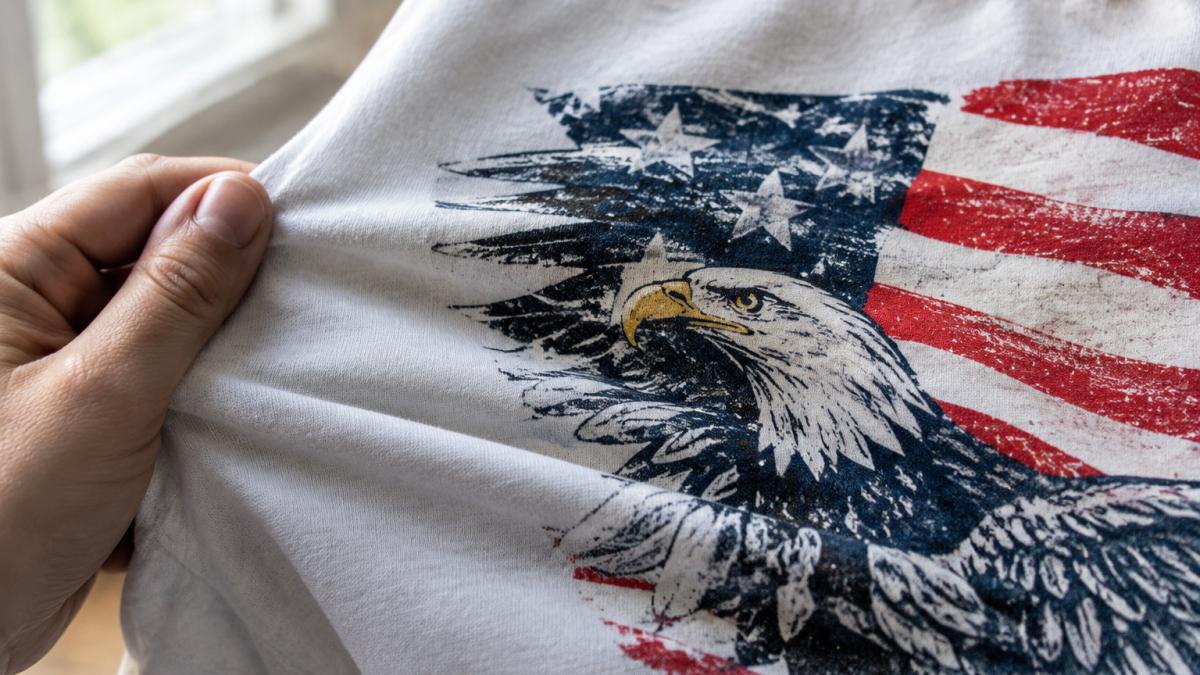
Check the back of the print as well. Plastisol usually leaves a clear edge and sits uniformly across the design. Water based ink can show a softer edge and a faint color change in the fabric, which is normal.
When you are unsure, ask the seller or printer directly. A reputable shop will tell you the ink type and show you examples of both.
Choosing the Right Ink for Your Next Shirt Order
Start with the shirt color. For light garments and designs where softness matters, water based ink is a strong choice. For dark garments, bold colors or larger runs, plastisol is often the more practical pick.
Consider the wearer as well. A shirt meant for everyday wear, gifts or long days in warm weather benefits from the breathability of water based ink. A shirt meant to make a loud statement on a dark base may do better with plastisol.
Finally, weigh the cost. Plastisol is often cheaper for bigger orders, while water based ink can carry a higher price for small runs because of extra setup and the underbase on dark garments. Request a sample before ordering in quantity, so you can judge the feel and color yourself.
If you want a shirt that feels soft and holds its color, browse our graphic tees and see how the printing looks in real designs.

National Institute for Occupational Safety and Health guidance on screen printing inks
U.S. Consumer Product Safety Commission guidance on apparel labeling and care
American Apparel and Footwear Association industry resources on textile printing
Frequently Asked Questions
Which is better, plastisol or water-based ink?
Neither is better in every case. Plastisol gives bolder, more opaque color, while water-based ink soaks into the fabric for a softer hand feel and better breathability. Choose plastisol for solid, high-contrast graphics and water-based ink for designs where comfort and a vintage, lived-in look matter more than maximum color punch.
Is water-based ink as durable as plastisol?
Both inks can hold up to washing when properly cured. Plastisol sits on top of the fabric, while water-based ink bonds into the fiber.
Which ink feels softer on a custom T-shirt?
Water-based ink feels softer because it penetrates the fabric rather than forming a raised layer on top. Plastisol leaves a more noticeable print surface, which some wearers describe as heavier or plastic-like. If soft hand feel is your priority, ask your printer for a water-based option on a cotton garment and request a sample to test the feel yourself.
How can you tell if a shirt is printed with plastisol or water-based ink?
Look at how the design sits on the fabric. Plastisol prints look thicker, sit on top of the shirt, and often have a glossy or slightly rubbery surface. Water-based prints look flatter, blend into the cotton, and feel nearly invisible to the touch. Stretching the fabric gently can also reveal whether the print flexes or cracks.

