

Table of Contents
- Why Most Graphic Tees Fail (And How to Spot Quality Before You Buy)
- How to Tell If a T-Shirt Is High Quality: The 5-Point Inspection
- The Difference Between Screen Printing and Direct to Garment
- What Is the Best Fabric for Graphic Tees?
- How to Wash Graphic T-Shirts to Prevent Fading
- Quality Graphic T-Shirts in Practice: What a $28 Tee Actually Gets You
- The Bottom Line
- Frequently Asked Questions
Last Updated: October 4, 2026
Why Most Graphic Tees Fail (And How to Spot Quality Before You Buy)
Most graphic tees fail because the fabric gives up before the print does.
The difference between a tee that survives fifty washes and one that cracks by wash five is rarely the design. It is the substrate and the print method.
The five-point inspection below takes under two minutes: stretch recovery, ink curing, interior construction, print method, and fabric weight.
How to Tell If a T-Shirt Is High Quality: The 5-Point Inspection
Run them fabric-first, because nothing else matters if the cotton is tissue paper. Most shoppers go design, then price, then fabric. Flip that sequence and you eliminate most bad shirts before the register.
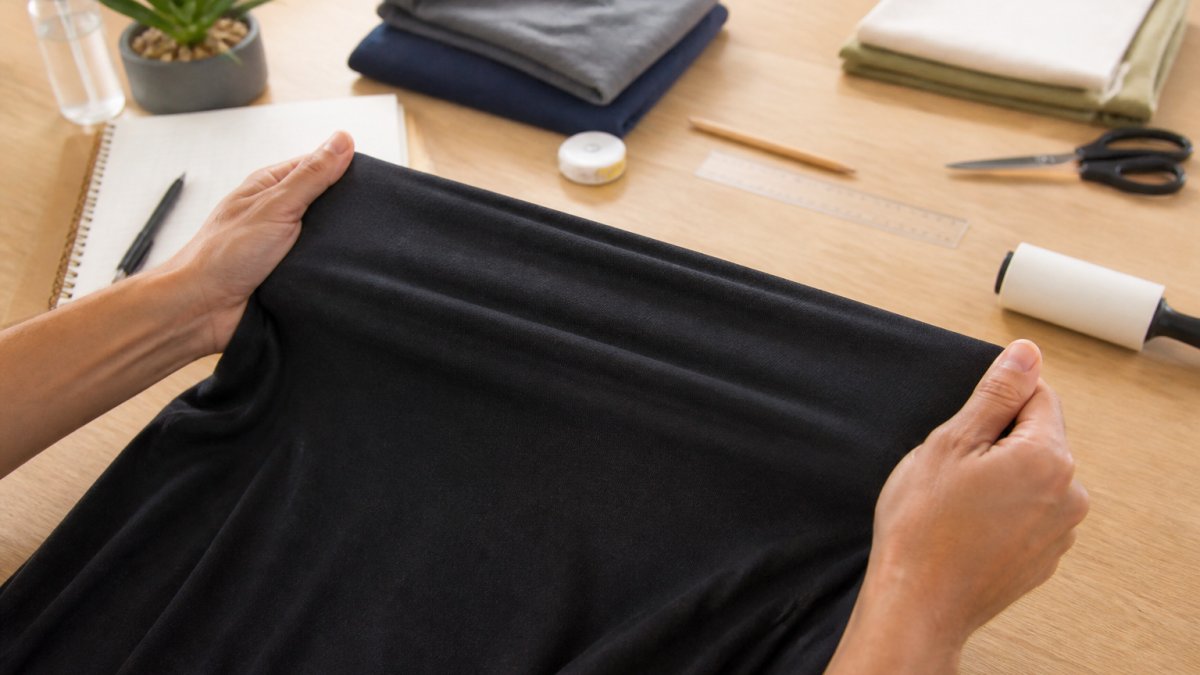
The Stretch Test and Recovery
Pull the fabric sideways across the chest, hold for three seconds, release. Quality cotton snaps back flat. Cheap cotton stays stretched and rippled.
This is the fastest tell in the inspection. Knit fabric is interlocking loops, not woven threads; stretching pulls those loops open, and fiber length determines whether they close.
Here is how to read the result:
- Snaps back flat with no ripples: long-staple or ring-spun cotton, good recovery. This shirt will survive the dryer.
- Recovers slowly, leaves faint waves: mid-grade cotton or a cotton-poly blend. Acceptable, but expect some relaxation over time.
- Stays stretched, feels thin, ripples hold: short-staple or open-end cotton. Walk away.
Test in two directions, across the chest and along the length.
Visual Inspection of Ink Curing
Tilt the print toward a light source and look at the ink surface. Properly cured ink sits flush with the fabric with a matte finish.
Curing is a temperature-and-time reaction, not a drying step. Plastisol ink is PVC particles suspended in plasticizer; it fuses rather than evaporates.
Here is what each failure looks like on the rack:
- Under-cured: the print feels slightly tacky or sticky to the touch, and a thumbnail dragged across the surface smears or lifts ink. Colors look duller than the sample. This print will fade and flake within a handful of washes.
- Over-cured: the print looks glossy or shiny under light, feels stiff and board-like, and shows fine hairline cracks at the edges of the design or along fold lines. This print is already failing; it just has not peeled yet.
- Properly cured: matte surface, ink flexes with the fabric without cracking, and the color is consistent edge to edge.
Run your thumbnail across the print edge. If ink lifts or flakes, the curing process failed, the most common defect in budget graphic tees, and one that has nothing to do with design quality.
Inside-Out Inspection
Turn the shirt inside out. You want clean, finished seams, not loose threads or raw edges. Most buyers skip this step, and it is the one that reveals how the garment was assembled.
Check four things:
- Stitch density at the hem and collar. Count the stitches per inch along the bottom hem. A quality tee runs roughly 10 to 12 stitches per inch. Below that, the seam is loose and will pull apart. Above it, the fabric may pucker.
- Taped neck and shoulders. Look for a strip of fabric running from shoulder to shoulder across the back of the neck. This tape covers the raw seam and stops the shoulder seams from stretching under the weight of the shirt. Untaped shoulders are the number one reason a tee sags at the neck after a few months.
- Side seams. Straight side seams mean the panels were cut and sewn on grain. Wavy or twisted side seams mean the fabric was cut off-grain, and the shirt will torque in the wash, the hem will rotate around your body over time.
Double-needle stitching at the hems and a seamless double-needle collar mark a shirt built to hold shape. Tubular construction, which has no side seams, reduces torque so the shirt does not twist in the wash, but only if the knit is on grain.
The Difference Between Screen Printing and Direct to Garment
The difference between screen printing and direct to garment comes down to ink delivery: screen printing pushes thick ink through a mesh stencil for bold, durable graphics, while direct to garment sprays water-based ink into the fabric for detailed, soft-hand prints.
Direct to garment wins on detail, handling gradients, fine linework, and photographic images screens cannot reproduce. The print sits in the fibers rather than on them, so hand-feel stays soft.
| Method | Best For | Hand-Feel | Durability | Detail Level |
|---|---|---|---|---|
| Screen printing | Bold, simple graphics, larger runs | Slightly raised | High | Low to medium |
| Discharge printing | Soft prints on dark cotton | Nearly none | High | Low to medium |
| Direct to garment | Photos, gradients, fine linework | Soft | Medium to high | High |
| Heat transfer | Small runs, quick turnaround | Noticeable edge | Lower | High |
Heat transfer sits at the bottom for a reason: the vinyl or paper layer sits on top of the fabric, which is why those prints peel first.
What Is the Best Fabric for Graphic Tees?
Fiber content drives everything downstream. Cotton holds ink well, breathes, and feels better against skin. Polyester resists shrinking and holds color longer but traps heat.
Cotton is graded by staple length: short-staple (roughly under an inch) has more fiber ends per yarn, meaning more pilling, a rougher surface, and a weaker yarn.
Two more things to check:
1900s Heavyweight Unisex Crewneck T-shirt | Gildan® 5000 →
- Shrinkage: preshrunk jersey knit has already been relaxed, so it will not lose a size in the dryer. Unpreshrunk cotton can shrink noticeably on the first wash, often around 5 to 7 percent in length, which is enough to turn a fitted tee into a crop top.
- Color fastness: rub a damp white cloth against the fabric. Dye transfer means the color will bleed in the wash. This is especially common with deep reds, blacks, and saturated blues on cheap cotton.
Regenerative organic cotton and other certified organic options cost more, but they usually come with better fiber length, which means a smoother print surface and less pilling over time.
Weight-to-Quality Correlation: Why GSM Matters
GSM stands for grams per square meter, the clearest single number for judging a tee.
GSM and ounces per square yard measure the same thing: one ounce per square yard equals roughly 33.9 GSM, so a 5.3-ounce tee is about 180 GSM and a 6.1-ounce tee about 207 GSM.
A practical GSM-to-use map:
- Under 150 GSM (under ~4.4 oz): undershirt or summer-only territory. Prints sit on thin fabric and crack faster because there is less surface for the ink to bond to.
- 150 to 180 GSM (~4.4 to 5.3 oz): light midweight. Comfortable in heat, but expect some show-through on white and lighter heathers.
- 180 to 200 GSM (~5.3 to 5.9 oz): the sweet spot for most graphic tees. Enough body to hold a print flat, enough breathability to wear year-round.
The correlation between weight and quality is strong but not perfect. Heavier fabric drapes better, resists print cracking, and holds shape through more wash cycles.
How to Wash Graphic T-Shirts to Prevent Fading
Wash graphic tees inside out in cold water, on a gentle cycle, and dry them on low heat or hang them. Those three habits prevent most fading, cracking, and shrinkage.
Heat is the enemy: hot water opens cotton fibers and releases dye, and a hot dryer bakes the ink brittle. Our routine:
- Turn the shirt inside out before it goes in the hamper.
- Wash cold with similar colors, never with towels or anything with zippers.
- Skip fabric softener. It coats the fibers and dulls the print.
- Tumble dry low for ten minutes, then hang to finish, or hang dry entirely.
- Never iron directly over the print. If you must, iron inside out.
Store folded rather than hung if the shirt is heavy. Hanging a wet heavyweight tee by the shoulders is how collars stretch out.
Quality Graphic T-Shirts in Practice: What a $28 Tee Actually Gets You
A $28 graphic tee should get you ring-spun cotton, a properly cured print, and construction that survives a year of regular wear.
Take our 1900s Heavyweight Unisex Crewneck T-Shirt at $28.78: a preshrunk jersey knit with double-needle sleeve and bottom hems and a taped neck and shoulders, the inside-out inspection checklist, satisfied before you open the package.

Our Patriotic Faith USA 250th Anniversary Commemorative T-Shirt uses 100% ring-spun cotton with a high stitch density collar and a tubular fit that resists twisting, optimized for DTG printing, fine detail without a plastic hand-feel.

For a gift, the Funny Sarcastic Vintage Born Pre-2000 Men's Graphic T-Shirt at $24.59 uses the same ring-spun base with a tear-away label, which matters more than people think for daily comfort.

If you want to check a shirt's print quality against a real standard, the American Association of Textile Chemists and Colorists test methods publish the industry procedures for colorfastness and crocking.
The price gap between a $12 tee and a $28 tee is not marketing. It is yarn quality, stitch density, and whether anyone bothered to cure the ink properly.
The Bottom Line
Most people buy graphic tees by how they look on the shelf, which is why so many end up as rags within two months.
Run the five checks: stretch it, tilt it toward the light, turn it inside out, identify the print method, feel the weight. Two minutes saves you a drawer full of cracked prints.
At Greatuncledad, we build our shirts around the checks that matter: quality guarantee on every order, fast shipping, and secure payments, with 24/7 email support if a size or print is not right. Sign Up and start with a tee that passes the inspection before it ever reaches your door.
Frequently Asked Questions
How can you tell if a graphic t-shirt is high quality?
Check four things: fabric weight (look for 5.3 oz or heavier), construction details like double-needle hems and taped neck and shoulders, print quality (no cracks or peeling), and fabric content (100% ring-spun cotton or a cotton-poly blend). A quality graphic t-shirt will pass the stretch test, show no ink cracking, and have smooth, even stitching inside and out.
What is the difference between screen printing and direct to garment printing?
Screen printing presses plastisol or water-based ink through a mesh screen onto the fabric. It creates thick, vibrant, long-lasting prints, especially on light colors. Direct to garment (DTG) printing works like an inkjet printer, spraying water-based ink directly into the fabric fibers. DTG produces softer, more detailed prints with no feel on the hand, but the colors may fade faster after repeated washing. The best method depends on your design and how long you want it to last.
How do you prevent graphic prints from cracking after washing?
Wash graphic t-shirts inside out in cold water on a gentle cycle. Use mild detergent and avoid fabric softener, which can break down the ink bond. Tumble dry on low heat or hang dry. High heat is the main cause of print cracking and fading. If you must iron, never iron directly on the print; turn the shirt inside out and use a low setting. Following these steps can add years to the life of your graphic tee.
Does fabric weight matter when buying graphic tees?
Yes. Fabric weight, measured in ounces per square yard or GSM, determines how durable and opaque a t-shirt feels. Lightweight tees (under 5 oz) may feel thin and wear out faster. Midweight (5.3 to 6 oz) is the sweet spot for everyday wear, holding its shape and supporting prints well. Heavyweight (6.5 oz and up) feels substantial and lasts longest but may be warmer. For graphic tees, a midweight 100% ring-spun cotton or cotton-poly blend offers the best balance of comfort and print durability.
