

Table of Contents
- Graphic Tees vs Embroidered Shirts for Men: The Short Answer
- How Embroidery and Printing Actually Differ
- Embroidered vs Printed Shirts Durability: What Survives the Wash
- Appearance, Texture, and Comfort in Real Wear
- Which Designs and Garments Suit Each Method
- How to Style Graphic Tees for Men Without Looking Loud
- How to Care for Embroidered Shirts and Printed Tees
- Cost, Turnaround, and Value Over Time
- Frequently Asked Questions
Last Updated: October 19, 2026
Graphic Tees vs Embroidered Shirts for Men: The Short Answer
For most men, graphic tees win on casual versatility and price, while embroidered shirts win on longevity and a quieter, more polished look. This guide from Greatuncledad breaks down where each earns its place in a wardrobe, and where the marketing oversells both.
The choice comes down to three things: what the design needs to do, how often you'll wear the garment, and whether the decoration should be the loudest or subtlest thing in the outfit.
Side-by-Side Comparison at a Glance
| Factor | Graphic Tee (Printed) | Embroidered Shirt |
|---|---|---|
| Design range | Bold art, text, full color | Simple logos, text, small crests |
| Durability | Good with proper care | Excellent, thread outlasts ink |
| Texture and feel | Flat ink on fabric surface | Raised thread, visible dimension |
| Comfort | Light, smooth against skin | Slight weight where stitching sits |
| Best garments | Cotton tees, sweatshirts | Polos, jackets, hats, heavier tees |
| Cost | Lower entry price | Higher per unit |
| Production time | Fast | Slower, more setup |
| Care demands | Wash inside out, low heat | Gentle wash, avoid snagging |
How Embroidery and Printing Actually Differ
Printing pushes ink onto fabric; embroidery sews thread through it. That mechanical difference explains almost every trade-off that follows, from how a design ages to how it feels on skin.
What Screen Printing Does to a Garment
Screen printing lays ink across the fabric surface, one screen per color. On a cotton tee it sits on top of the weave, so a large print feels slightly stiff at first and heavy coverage on a thin shirt can crack along fold lines over time. The trade-off is worth it: no other method delivers full-color artwork, gradients, or photographic detail at this price.
What Thread and Stitching Add to a Shirt
Embroidery builds the design out of thread, stitch by stitch, creating a raised, textured mark with real depth. It cannot reproduce fine gradients or photographic art, but a clean logo or short line of text looks sharper and more premium than the printed equivalent. The thread moves with the fabric rather than sitting on top of it, which is why embroidery holds up so well.
Embroidered vs Printed Shirts Durability: What Survives the Wash
Embroidered vs printed shirts durability favors embroidery in most real-world wear. Thread is mechanically locked into the fabric; ink is a surface layer. Wash both a hundred times and the embroidered mark usually still reads clearly while the print has faded or cracked.
That said, well-made printed apparel lasts years. A common mistake is tossing graphic tees in with towels, the abrasion does more damage than detergent ever will.
Appearance, Texture, and Comfort in Real Wear
Appearance splits along a clear line: prints deliver color, illustration, and bold design, while embroidery delivers dimension and a premium feel that reads as more expensive even when it isn't. But whether you'll want to wear it all day comes down to four mechanical factors: print coverage, stitch density, backing material, and placement.
Print Coverage: Why a Big Graphic Feels Different From a Small One
The feel of a print depends almost entirely on how much of the shirt is covered:
- Small chest print (under roughly 4 inches): You will not feel it after the first wash. The ink sits on a small area that doesn't flex much.
- Full-front graphic: A large solid block of plastisol ink can feel stiff and slightly tacky at first, especially on a lightweight tee. It softens with washing, but heavy coverage on a thin shirt can crack along fold lines.
- Water-based and discharge inks: These dye the fabric rather than sitting on top of it, so even a full-front print feels close to bare cotton. They produce softer, more muted color and don't work on every fabric blend.
A practical rule: the larger and more solid the printed area, the more the shirt's hand feel changes. For a graphic tee that feels like a plain tee, choose a small print or ask whether water-based ink is used.
Stitch Density and Backing: The Hidden Comfort Variables in Embroidery
Two things determine whether embroidery feels fine or irritating:
- Stitch density: Dense fills (large solid shapes, thick lettering) create a stiffer, heavier patch. Light outlines and small crests stay flexible. A dense 4-inch chest logo can feel like a small shield; a 2-inch outline logo disappears.
- Backing: Almost every embroidered garment has a stabilizer behind the stitching. Cut-away backing is soft and durable but adds bulk; tear-away backing is lighter but can leave a scratchy edge if not trimmed cleanly. Cheap backing against bare skin is the number-one reason men describe an embroidered shirt as 'itchy.' Good backing, properly trimmed, is unnoticeable.
- Placement: On a polo collar, a jacket chest, or a hat, you will never notice the embroidery. Across a full shirt back or directly over the spine, you will, every time you lean against a chair.
Breathability and Weight in Real Wear
A lightweight cotton tee with a small print breathes like a tee; a heavyweight tee with a full-front plastisol print traps more heat because both fabric and ink resist airflow.
For summer, choose a mid-weight cotton tee with a small print or water-based ink. For fall and winter layering, a heavyweight tee or sweatshirt with either decoration works because you're wearing it over a base layer anyway.
Appearance Over Time
Prints fade and crack; embroidery holds its shape but can pill where thread abrades. A printed graphic looks best in its first year and then ages visibly, while an embroidered logo looks essentially the same in year five as in year one, provided the thread doesn't snag. That's why embroidered shirts read as more 'serious', they don't visibly degrade.
Which Designs and Garments Suit Each Method
Complex artwork, gradients, and photographic detail belong to printing; simple design, logos, short text, and small crests belong to embroidery.
Garment type decides the rest. Structured garments like polos, jackets, sweatshirts, and hats take embroidery beautifully because the fabric supports the thread without puckering; thin, stretchy tees suit print.
For a humorous graphic tee, print is the only realistic option. For a small embroidered mark on a polo, embroidery is the clear winner.
Vintage Edition T-Shirt for Men - Funny Born Before 2000 Gift →
How to Style Graphic Tees for Men Without Looking Loud
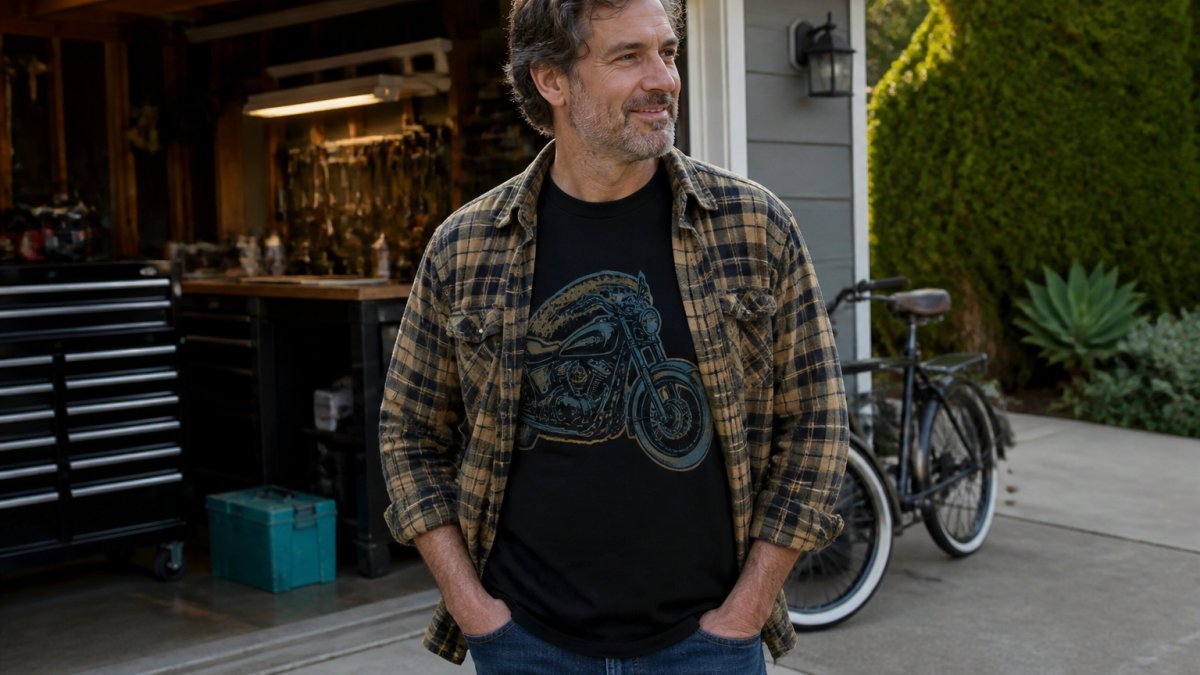
The loud-tee problem is almost always a fit and layering problem, not a design problem. Get those right and a graphic tee reads as intentional rather than try-hard.
Fit, Fabric Weight, and Placement
Fit does more work than the design itself. A tee that hits mid-hip with a sleeve ending mid-bicep looks deliberate. One that's too long or too tight looks sloppy no matter what's printed on it.
- Fit: shoulder seam at the shoulder bone, hem at mid-fly
- Fabric weight: mid-weight cotton holds shape and drapes cleanly
- Placement: a small chest print reads calmer than a full-front graphic
If you normally stick to solid colors, start with a dark tee and a small print. It gives you the personality without the volume.
How to Care for Embroidered Shirts and Printed Tees
How to care for embroidered shirts comes down to protecting the thread from snags: wash inside out on a gentle cycle, and skip the dryer or use low heat.
Printed tees need the same inside-out treatment plus one extra rule: no high heat. Follow the FTC care labeling guidance on the garment tag, which legally must state the recommended washing and drying method.
Cost, Turnaround, and Value Over Time
Printing costs less per unit and turns around faster because setup is simpler; embroidery costs more and takes longer since each garment is stitched individually. That's why most high-volume promotional apparel is printed. But the sticker price matters less than cost per wear, which flips the math more often than most men expect.
The Upfront Numbers
For a single decorated garment, the pattern is consistent across the market:
- Screen-printed graphic tee: The lowest entry point. Setup is a screen per color, but once set up, each additional shirt is cheap. This is why print dominates bulk orders and why retail graphic tees can sell for $20-$30.
- Embroidered polo or shirt: Higher per unit because each garment is stitched individually and requires digitizing the design (a one-time setup cost that can run from roughly $25 to $100 depending on complexity). Small runs carry most of that setup burden; larger runs spread it out.
- Turnaround: Print is typically days; embroidery is typically one to two weeks for custom work, longer during peak season.
Cost Per Wear: The Calculation That Changes the Answer
Cost per wear is purchase price divided by the number of times you actually wear the garment. The trap is comparing a $25 graphic tee to a $60 embroidered polo without accounting for how each gets worn.
- A $25 graphic tee worn 30 times costs about $0.83 per wear.
- A $60 embroidered polo worn 150 times over three years costs about $0.40 per wear.
- A $25 graphic tee worn 5 times because the design felt too loud costs $5.00 per wear, the most expensive option in the closet.
The lesson: the cheaper shirt is only cheaper if you wear it. A bold graphic that sits in the drawer is a worse buy than a quiet embroidered logo you reach for weekly.
Design Longevity and Repairability
Two factors competitors rarely mention:
- Design longevity: A novelty graphic dates quickly. A small embroidered logo or crest is design-neutral, it looks the same in five years. If you want a shirt you'll still wear in 2030, embroidery has the edge on staying power, not just durability.
- Repairability: A snagged embroidered thread can often be trimmed or re-stitched by a local tailor for a few dollars. A cracked or faded print cannot be repaired, only covered or replaced. Embroidery is the more repairable decoration, which extends its effective life.
When Print Wins on Value
Print wins when variety is the point. Five different designs for different moods, occasions, or gifts make print's low entry price and fast turnaround the rational choice. It also wins for one-off event shirts, humor tees, and anything where the design is the reason you're buying.
At Greatuncledad, our graphic tees are built for exactly this trade-off: ring-spun cotton for a soft feel, a seamless double-needle collar for durability, and a tear-away label for comfort. The Vintage Edition T-Shirt for Men at $24.18 is a solid example, and the Emotional Support Husband Graphic T-Shirt at $24.19 shows how a simple design lands harder than a busy one. For a heavier option, the 1900s Heavyweight Unisex Crewneck at $28.78 holds shape well under regular wear.


Frequently Asked Questions
Are graphic tees out of style in 2026?
No. Graphic tees remain a standard casual piece for men, and the shift is toward simpler designs and better fabric rather than loud all-over prints. A dark shirt with one clean line of text or a single small graphic fits under a flannel, a jacket, or a plain overshirt without looking dated. What reads as out of style is a busy, low-contrast print on thin fabric that has cracked after a few washes. Pick a ring-spun cotton tee with a design that sits flat and you are wearing something current, not nostalgic.
Which lasts longer, a printed graphic or embroidery?
Embroidery generally outlasts a printed graphic. Thread is stitched through the fabric, so it does not flake or peel the way ink sits on top of the surface. A print's lifespan depends heavily on the ink and the wash routine: cold water and low heat keep it intact much longer, while hot water and a hot dryer break it down faster. On the embroidered vs printed shirts durability question, embroidery wins on lifespan, but a well-made print on heavyweight cotton can still hold up for years with proper care.
Are embroidered shirts comfortable enough for everyday wear?
For a chest or pocket-sized design, yes. A small embroidered logo or line of text adds a little weight and stiffness in one spot, which most men stop noticing after a wear or two. Large, dense embroidery across the whole back or chest is where comfort drops, because the stitching stiffens the fabric and reduces breathability in that area. If you want an embroidered shirt for daily wear, keep the design small and choose a cotton or cotton-blend base rather than a thin synthetic.
Can you machine-wash embroidered shirts?
Yes, in most cases. Turn the shirt inside out, wash cold with similar colors on a normal cycle, and skip the dryer or use low heat. The inside-out step protects the stitching from rubbing against other garments, and cold water keeps the thread from shrinking at a different rate than the fabric. Avoid bleach and fabric softener, which can dull thread color. If the embroidery has a stiff backing, hang dry it flat so the design does not pucker while the garment is still damp.
Which is better for detailed designs, printing or embroidery?
Printing handles fine detail, gradients, and small text far better. Ink can reproduce thin lines and blended colors that thread cannot, because embroidery works in discrete stitches and a limited thread palette. Embroidery suits bold, simple artwork: a short phrase, a logo, a shape with clear edges. If your design has more than a few words or needs shading, choose a printed graphic tee. If it is one strong statement in solid color, embroidery gives it a raised texture that printing cannot match.
